

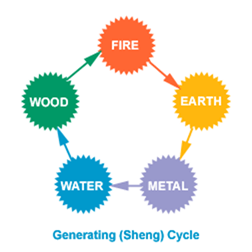
5 Elements
5 ELEMENTS
The human body is built to experience stress and react to it. Stress can be positive, keeping us alert and ready to avoid danger. However, stress becomes negative when a person faces continuous challenges without relief or relaxation between challenges. In this case, the person becomes overworked and stress-related tension builds. This can lead to physical symptoms including headaches, upset stomach, elevated blood pressure, chest pain, and problems sleeping. Research suggests that stress also can bring on or worsen certain symptoms or diseases.
Often, people use alcohol, tobacco, or drugs to try and relieve their stress. Unfortunately, instead of relieving the stress and returning the body to a relaxed state, these substances tend to keep the body in a stressed state and cause more problems. Although it can be difficult (it's easier to place blame on external factors), until you accept responsibility for the role you play in creating or maintaining it, your stress level will remain outside your control.
Here are our top 5 tips for stress reduction:
1. Avoid unnecessary stress. Not everything can be avoided and there are some stressors that must be addressed. However, there are many stressors that can be avoided.
-
If it's not an absolute "yes," then it's a “no” - Know your limits and stick to them. In both your personal or professional life, refrain from accepting added responsibilities that will put you past your limit. Taking on more than you can handle will always set you up for stress.
-
Avoid people who stress you out - If someone consistently causes stress in your life and you can’t turn the relationship around, limit the amount of time you spend with that person or end the relationship completely.
-
Take control of your environment - While you may feel like it helps with stress to zone out in front of the TV, it is actually very stimulating to the brain and makes it difficult to relax once you turn it off. This is especially important before bedtime since getting enough sleep is a power player in combating stress. Turn the TV off and play some calming music while you cook dinner or get ready for bed. If traffic’s got you tense, take a longer but less-traveled route. If going to the market is an unpleasant chore or you feel you don't have time for it, order your groceries online and have them delivered or ready for pickup.
-
Reduce your to-do list - Analyze your schedule, responsibilities, and daily tasks. If you’ve got too much on your plate, distinguish between the “shoulds” and the “musts.” Drop tasks that aren’t truly necessary to the bottom of the list or eliminate them entirely.
2. Alter the situation. If you can’t avoid a stressful situation, try to alter it. Figure out what you can do to change things so the problem doesn’t present itself in the future. Often, this involves changing the way you communicate and operate in your daily life.
-
Express yourself - If something or someone is bothering you, communicate your concerns in an open and respectful way. When you keep your feelings bottled up, resentment builds and your body responds to it the same it responds to stress. Expressing how you feel may or may not change the situation but it will most likely reduce your resentment because you feel heard.
-
Compromise - After you have expressed your concerns, make sure you look at the other person's side/situation as well. How can you meet them halfway. If you are willing to bend a little you have a better chance of finding middle ground and being in a better situation that will reduce your stress.
-
Be assertive - Don’t Take control and deal with problems head on, doing your best to anticipate and prevent them. If you have a deadline to meet and your chatty colleague wants to talk, let them know you only have five minutes to talk at the beginning of the conversation.
-
Manage your time - Poor time management can cause a lot of stress. Get a planner and use it every day. Plan ahead and make sure you don’t overextend yourself.
3. Adapt to the stressor.
If you can’t change the stressor, change yourself. You can adapt to stressful situations and regain your sense of control by changing your expectations and attitude.
-
Reframe problems - Try to view stressful situations from a more positive perspective. Rather than fuming about a traffic jam, look at it as an opportunity to pause and regroup, listen to your favorite radio station, or enjoy some alone time.
-
Look at the big picture - Take perspective of the stressful situation. Ask yourself how important it will be in the long run. Will it matter in a month? A year? Is it really worth getting upset over? If the answer is no, focus your time and energy elsewhere.
-
Adjust your standards - Perfectionism is a major source of avoidable stress. Stop setting yourself up for failure by demanding perfection. Set reasonable standards for yourself and others, and learn to be okay with “good enough.”
-
Focus on the positive - When stress is getting you down, take a moment to reflect on all the things you are grateful for in your life, including your own positive qualities and gifts. This simple strategy can help you keep things in perspective.
4. Accept what you can’t change. Sometimes stress is unavoidable. In this case acceptance is key. Acceptance may be difficult, but in the long run, it’s less stressful than being in denial about a situation you can’t change.
-
Don’t try to control the uncontrollable - Many things in life are beyond our control— particularly the behavior of other people. Rather than stressing out over them, focus on the things you can control such as the way you choose to react to problems.
-
Learn from it - When we are faced with challenges, look at them as opportunities for personal growth. Every struggle is an opportunity to learn something and grow from it. Reflect on your own role in the situation learn from your mistakes that may have contributed to the situation.
-
Share your feelings - Talk to someone you trust and can be open with. Expressing what you’re going through can be very freeing, even if there’s nothing you can do to alter the stressful situation.
-
Learn to forgive - Accept the fact that we live in an imperfect world and that people make mistakes. Let go of anger and resentments. Free yourself from negative energy by forgiving and moving on.
-
Use a mantra - When you use a Mantra there is no need to depend upon any external agency to bring about change; it is an acceptance of responsibility for oneself and puts control in your hands. "I accept things as they are right now," can be a simple, yet very powerful tool.
5. Make time to relax.
-
Take a walk - Even just fifteen minutes of walking can reduce stress and reset your mindset. Take a quick walk on your lunch break or when you get home from work.
-
Practice yoga - Yoga is a powerful stress reducer and provides many other benefits as well. Many yoga studios offer a variety of classes at many times throughout the day so you can practice at your convenience. You can also pick up a yoga book and practice at home.
-
Meditate - Regular meditation and relaxation can significantly help in reducing stress to manageable and healthy levels, and relaxation and meditation exercises are now widely taught. Even just 5-15 minutes of meditation a day has been shown to benefit mental health, including a reduction in proneness to depression, an increase in emotional positivity, and an increased ability to deal with life’s inevitable stresses. (Ask us for more information on meditation practices)
-
Breathe - Deep breathing is not only relaxing, it's been scientifically proven to affect the heart, the brain, digestion, and the immune system. A simple technique is the 7/11 breath. Breath in slowly for 7 counts and then out for 11 counts. Do this four times making sure to breath into your abdomen.
